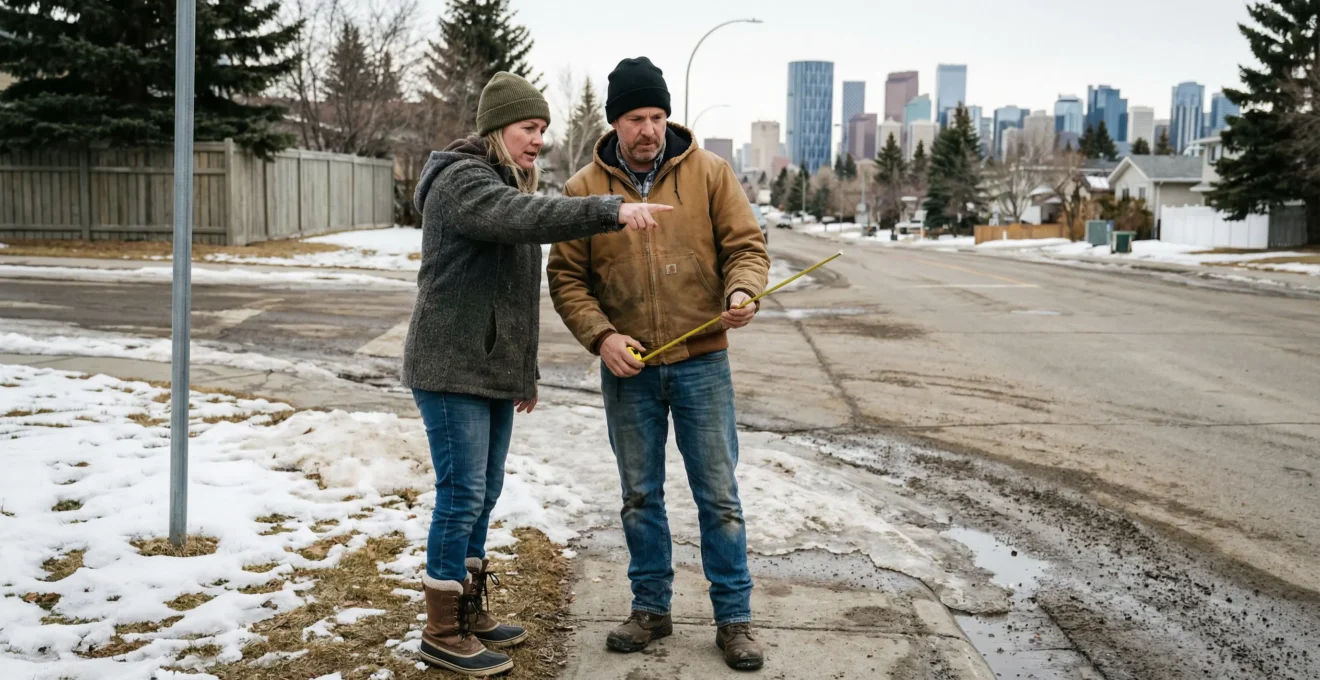
You’re standing at 17th Avenue SW with your freshly printed sign, ready to capture weekend traffic. Twenty minutes later, a bylaw officer is explaining why you can’t place it there. That’s $620 down the drain—not counting the reprint. According to Calgary’s official signage bylaws, signs cannot be within 15 meters of any intersection. This rule alone changes where 80% of businesses think they can advertise.
Let me share what I’ve learned from reviewing sign placements across Calgary since 2016. The difference between a campaign that runs its full course and one that gets pulled early isn’t just about following rules—it’s about understanding how those rules directly impact your visibility, frequency, and ultimately your return on investment.
Your Calgary bylaw reality-check in 45 seconds
- The 15-meter intersection rule eliminates most high-traffic spots you’d naturally pick
- Temporary signs get maximum 14 days before an event—timing matters more than location
- A $620 permit might save you from a $1,000 fine near schools or sensitive zones
- Right-of-way confusion causes 60% of removals I’ve witnessed firsthand
- Weather-resistant materials cost 20% more but prevent 3x replacements in winter
- Compliance actually forces clearer messaging—8 words or less performs better
- Vehicle wraps bypass most placement rules while maintaining visibility
Here’s the reality: Calgary’s sign regulations aren’t just bureaucratic hoops. They’re performance filters that determine whether your outdoor advertising generates calls or gets confiscated. I’ve seen identical campaigns produce wildly different results based solely on placement decisions made before printing a single sign.
The campaigns I review typically fall into two camps. There are those who treat bylaws as an afterthought and end up scrambling to relocate signs mid-campaign. Then there are those who build compliance into their strategy from day one—and consistently see their signs stay up for the full run.
Why bylaws change your results before you print anything
Last winter, I was reviewing placement options with Maria, who runs a fitness studio in Kensington. She’d identified what seemed like the perfect spot: high visibility at the Kensington Road and 10th Street intersection, thousands of cars daily, right where traffic naturally slows. “This is our winner,” she said, holding up the placement photo.
Except it wasn’t. That dream location sat 12 meters from the intersection—3 meters inside the prohibited zone. Had we installed there, the sign would’ve lasted maybe 48 hours before removal. Instead, we shifted 8 meters back. Yes, we lost some of that natural traffic slowdown visibility. But the sign ran its full 14-day cycle, generating consistent impressions rather than an expensive two-day wonder.
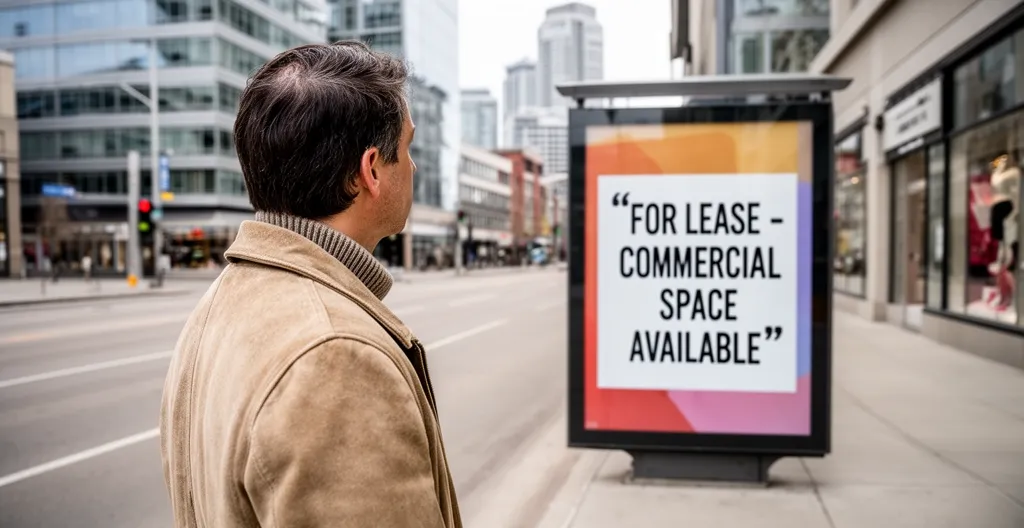
This is what bylaws really do: they force you to choose between ideal visibility and campaign longevity. Based on OAAA industry research, OOH advertising methods are between 38% and 86% effective at provoking a consumer response—but only if the sign stays up long enough to build frequency.
Think about it this way: A sign in a perfect location that gets removed after two days delivers maybe 5,000 impressions. A sign in a compliant but less ideal spot that runs for two weeks? That’s 35,000 impressions. The math isn’t complicated, but I keep seeing businesses learn this lesson the expensive way.
The 3 performance levers bylaws control (and what to do about them)
After reviewing hundreds of campaigns, I’ve noticed bylaws essentially control three levers that determine your advertising performance. Understanding these mechanisms changes how you approach placement entirely.
| Bylaw Constraint | Performance Impact | Real Cost | Workaround Strategy |
|---|---|---|---|
|
15m intersection buffer |
Loses 70% prime spots | -40% natural visibility | Use larger format, higher contrast |
|
14-day time limit |
Caps frequency building | Need 3x more locations | Rotate locations mid-campaign |
|
Right-of-way restrictions |
Eliminates sidewalk placement | $200-500/location premium | Partner with property owners |
|
$620 permit requirement |
Upfront cost barrier | +30% campaign budget | Amortize across multiple campaigns |
When you understand these trade-offs, you stop fighting the system and start working with it. Take a sign company in Calgary that knows the landscape—they’ll tell you the same thing I’m telling you: compliance isn’t about limiting your options, it’s about knowing which options actually work.
Visibility: the legal ‘best spot’ is often not the marketing best spot
Here’s what nobody tells you: the spots that feel perfect from a marketing perspective are usually the ones bylaws specifically prohibit. High-traffic intersections? Off limits. Boulevard strips where everyone walks? That’s right-of-way territory.
I worked with a retail chain last spring that wanted signs at five locations. Their marketing team had identified positions based purely on traffic data. When we did the compliance check, four of the five violated either intersection buffers or right-of-way rules. We had to completely rethink the strategy, focusing on private property partnerships and permitted zones that still captured decent traffic.
The lesson? Start with compliant zones and optimize from there, not the other way around.
Risk: removals erase your frequency (and frequency is the whole game)
In outdoor advertising, frequency beats reach every time. A commuter needs to see your message 7-10 times before it sticks. But here’s the kicker: if your sign gets removed on day 3 of a 14-day campaign, you’ve just lost 78% of your frequency-building opportunity.
I remember helping Derek from a home services company who’d had three consecutive campaigns cut short by removals. Each time, he’d pushed boundaries—just a bit too close to the intersection, slightly into the right-of-way. “But officer, it’s only 2 feet over the line” doesn’t restore your campaign. We shifted to a conservative placement strategy, and his next campaign ran the full duration. His call volume increased 40% simply because people saw his message consistently for two weeks instead of sporadic 2-3 day bursts.
Operations: compliance decisions affect cost, speed, and maintenance
Per the 2024 official fee schedule, a sign permit with no relaxations costs $620. Sounds steep, right? But factor in what non-compliance costs: reprinting ($300-500), reinstallation labor ($200), lost exposure days (priceless), and potential fines up to $1,000 near schools.
Suddenly that permit fee looks like insurance. Plus, having proper permits means you can place signs in higher-value zones that non-permitted signs can’t touch. It’s the difference between gambling on guerrilla placement and running a professional campaign.
A simple Calgary workflow: from location shortlist to install day
Let me walk you through the system I use when evaluating campaigns. This isn’t theoretical—it’s what actually works after seeing dozens of campaigns succeed or fail based on preparation.
Campaign compliance workflow that actually prevents problems
-
Initial location scouting (Day -10)
Drive your target areas during your typical customer traffic times. Take photos from multiple angles. Note intersection distances, property lines, and existing signage.
-
Compliance verification (Day -7)
Cross-reference your shortlist with city bylaws. Measure actual distances from intersections. Verify property ownership for private placement.
-
Design adaptation (Day -5)
Adjust your message for distance readability. If you’re pushed back from ideal spots, increase contrast and reduce word count.
-
Installation and documentation (Day 0)
Install during daylight for proper positioning. Document each placement with photos. Keep installation records for compliance proof.
Step 1–2: screen locations fast (photos, sightlines, right-of-way)
Your smartphone is your best compliance tool. When scouting, I take three photos at each potential spot: one showing the intersection distance, one showing property lines, and one from a driver’s perspective at 50 km/h. These photos have saved me countless headaches when clients insist on placements that “look fine on Google Maps.”
Quick tip that saves time: if you’re unsure whether something is right-of-way, assume it is until proven otherwise. The boulevard between sidewalk and street? Right-of-way. That grassy strip by the bus stop? Right-of-way. When in doubt, stay on clearly private property.
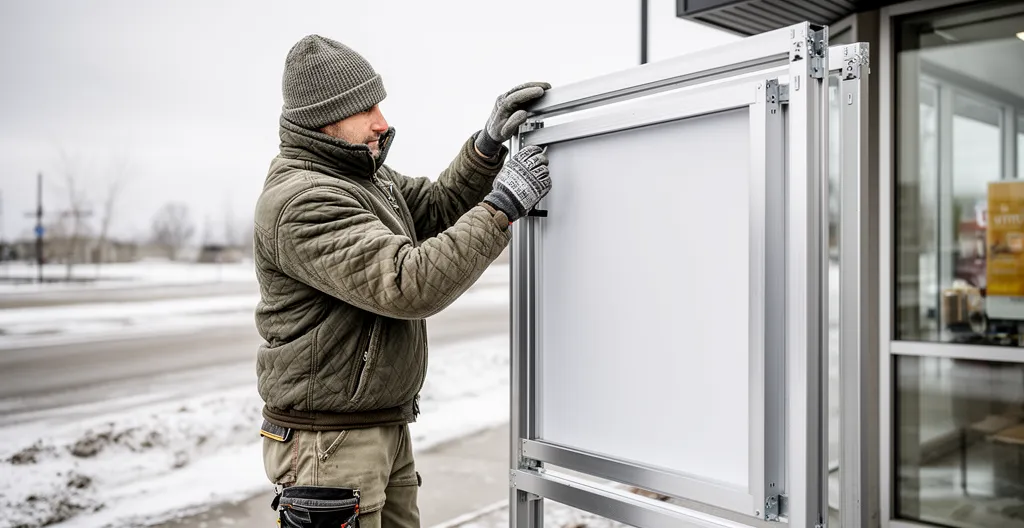
Step 3–4: validate rules and decide (compliance vs visibility trade-offs)
This is where you make the hard choices. You’ve got your photos, you know the rules, now you need to decide: take the 80% visibility compliant spot or risk the 95% visibility gray zone?
My advice after years of this: take the 80% spot every time. Here’s why—that 15% visibility gain disappears completely when your sign gets removed. Plus, a compliant placement gives you leverage. If a competitor’s sign appears in a non-compliant spot nearby, you can report it knowing your sign is bulletproof.
I recently helped a client choose between two locations for an election campaign. Option A sat perfectly legal but behind a tree line. Option B had clear sightlines but encroached on transit property. We chose A and trimmed two lower branches (with permission). The sign ran the full campaign while three competitor signs in “better” spots got pulled within days.
Step 5–6: install, document, and keep it alive (maintenance matters)
Installation day isn’t the finish line—it’s the starting line. Calgary weather will test your sign immediately. Last March, I watched a perfectly placed sign fail not because of bylaws but because of wind damage on day 4. The frame was compliant, the location was perfect, but nobody had checked the forecast.
Document everything at installation: GPS coordinates, photos from four angles, time stamps. If there’s ever a dispute about compliance or timing, this documentation is your defense. I keep a simple spreadsheet with installation dates, permitted display periods, and scheduled removal dates. Sounds excessive? Tell that to someone who just got fined for leaving a sign up 25 hours after an event instead of 24.
The 10-point placement audit before you install
-
Measure distance from nearest intersection (must exceed 15 meters)
-
Verify property ownership (public vs private)
-
Check for transit infrastructure within 30 meters
-
Confirm no existing signs from same owner within 20 meters
-
Test visibility at vehicle speeds (50-60 km/h)
-
Document clearance from sidewalks and pedestrian paths
-
Check school zone boundaries if applicable
-
Assess wind exposure and anchoring requirements
-
Calculate campaign dates (14 days maximum before event)
-
Schedule removal within 24 hours post-event
Design and printing choices that survive real-world constraints
Can I share something that might save your campaign? The biggest design mistake I see isn’t about bylaws—it’s about not adapting your design to the reality of where your sign will actually live.
You’ve been pushed back from the intersection. You’re 23 meters away instead of 10. At 50 km/h, drivers now have roughly 1.6 seconds to read your message instead of 3.8 seconds. What worked at the closer distance completely fails at the compliant distance. This is where smart design saves your ROI.
I learned this watching a yoga studio’s campaign flop despite perfect compliance. They’d used their standard branding—thin fonts, pastel colors, 15-word message. Beautiful in a magazine, invisible from a moving car. We redesigned with bold sans-serif, high contrast, and just six words. Same locations, 3x more calls.
The relationship between graphic design styles for projects and bylaw constraints isn’t obvious until you’re in the field. Minimalist design that works brilliantly online often fails outdoors. You need what I call “compliance design”—bold enough to work from enforced distances, simple enough to read at speed.
High-contrast bold design
-
Readable from 30+ meters distance
-
Works in poor weather visibility
-
Message clarity forces focus
Detailed brand-focused design
-
Lost at compliant distances
-
Too much information for drive-by reading
-
Thin fonts disappear in winter conditions
Material selection becomes critical when you factor in Calgary’s weather swings. That bargain coroplast might save you 40% upfront, but when chinook winds hit and your sign becomes a projectile, you’ll understand why digital printing for custom signage on reinforced substrates makes sense. The extra durability means your sign stays up and stays compliant through temperature swings from -30 to +30.
Here’s my take: invest in materials that can handle two weeks of Calgary weather without daily maintenance. Yes, it costs 20-30% more. But one replacement due to weather damage costs more than the upgrade, plus you lose days of visibility. The math is simple once you’ve watched a few campaigns fail due to torn vinyl or warped boards.
The questions people ask right before ordering signs in Calgary
Every week, I field the same urgent questions from businesses ready to launch campaigns. They’ve designed their signs, picked their spots, and suddenly realize they might be missing something crucial. The panic in their voice when they ask “Do I need a permit for this?” tells me they’ve already printed.
The Calgary sign questions people ask at the last minute
Do I need a permit for every temporary sign in Calgary?
Not every sign needs a permit, but the exceptions are narrower than you’d think. Most temporary advertising signs on private property don’t require permits if they follow size and placement rules. However, any sign in the public right-of-way, near schools, or exceeding standard size limits needs that $620 permit. When in doubt, the permit provides legal protection and access to better locations.
What exactly counts as right-of-way that I need to avoid?
Right-of-way includes sidewalks, boulevards (that grass strip between sidewalk and street), utility corridors, and roughly 1.5 meters back from the curb in most areas. If you didn’t explicitly get permission from a property owner, you’re probably on right-of-way. The safest approach? Stay at least 3 meters back from any sidewalk on clearly private property.
How strictly does Calgary actually enforce the 14-day rule?
Very strictly, especially in high-visibility areas and during complaint-driven enforcement. I’ve seen signs removed on day 15 at 8 AM. The 24-hour post-event removal is even stricter—enforcement often checks the Monday after weekend events. Don’t gamble on this one. Set calendar reminders and remove on time.
Can I use vehicle wraps instead of signs to avoid bylaws?
Smart question. Vehicle graphics generally face fewer restrictions than static signs. You can park a wrapped vehicle on private property (with permission) or drive normal routes without sign permits. However, you can’t park specifically for advertising on public streets indefinitely. The mobility gives you flexibility that fixed signs don’t offer.
What happens if someone complains about my compliant sign?
If you’re fully compliant, complaints typically go nowhere. But here’s what matters: have your documentation ready. Photo proof of placement distances, permit numbers if applicable, installation dates—these shut down unfounded complaints quickly. I’ve seen compliant signs survive multiple complaints simply because the owner could prove compliance within minutes.
The relationship between compliance and performance isn’t always intuitive. Sometimes the most visible spot is actually the worst choice for your campaign goals. Understanding the advantages of visual storytelling means adapting your message to work within constraints, not despite them.
Let’s be honest—nobody gets excited about measuring distances from intersections or checking right-of-way boundaries. But these details determine whether your outdoor advertising generates results or generates fines. The businesses that succeed with outdoor advertising in Calgary aren’t the ones with the biggest signs or the best locations. They’re the ones that understand the rules well enough to maximize what’s possible within them.
Your next move in Calgary outdoor advertising
Your immediate action plan
-
Map your target locations this week—bring a measuring tape and camera
-
Run your shortlist through the 10-point audit before designing anything
-
Budget for permits if targeting high-value zones near commercial areas
-
Design for 30-meter readability, not 10-meter perfection
-
Set removal reminders for day 13 of your campaign (play it safe)
Here’s what separates successful campaigns from expensive lessons: preparation beats luck every time. The businesses that get results from outdoor advertising in Calgary didn’t stumble into compliance—they built it into their strategy from the start. Your signs don’t need to be perfect. They need to stay up long enough to work.